BOOK ONE · SETTING
The Adelaide Hills Setting of Always Home
A real cool-climate region. A house rebuilt from the frame. The country a psychological tech-thriller asks for.

BOOK ONE · SETTING
A real cool-climate region. A house rebuilt from the frame. The country a psychological tech-thriller asks for.
The Adelaide Hills sit east of the city, a slow climb up the escarpment into cool-climate country. Eucalyptus dominates. Stringybark, manna gum, river red. The air at altitude is colder than the plain below. In autumn the mornings carry a mineral smell, something like wet stone and bark, and the light arrives slowly because it has to find its way over the ridge.
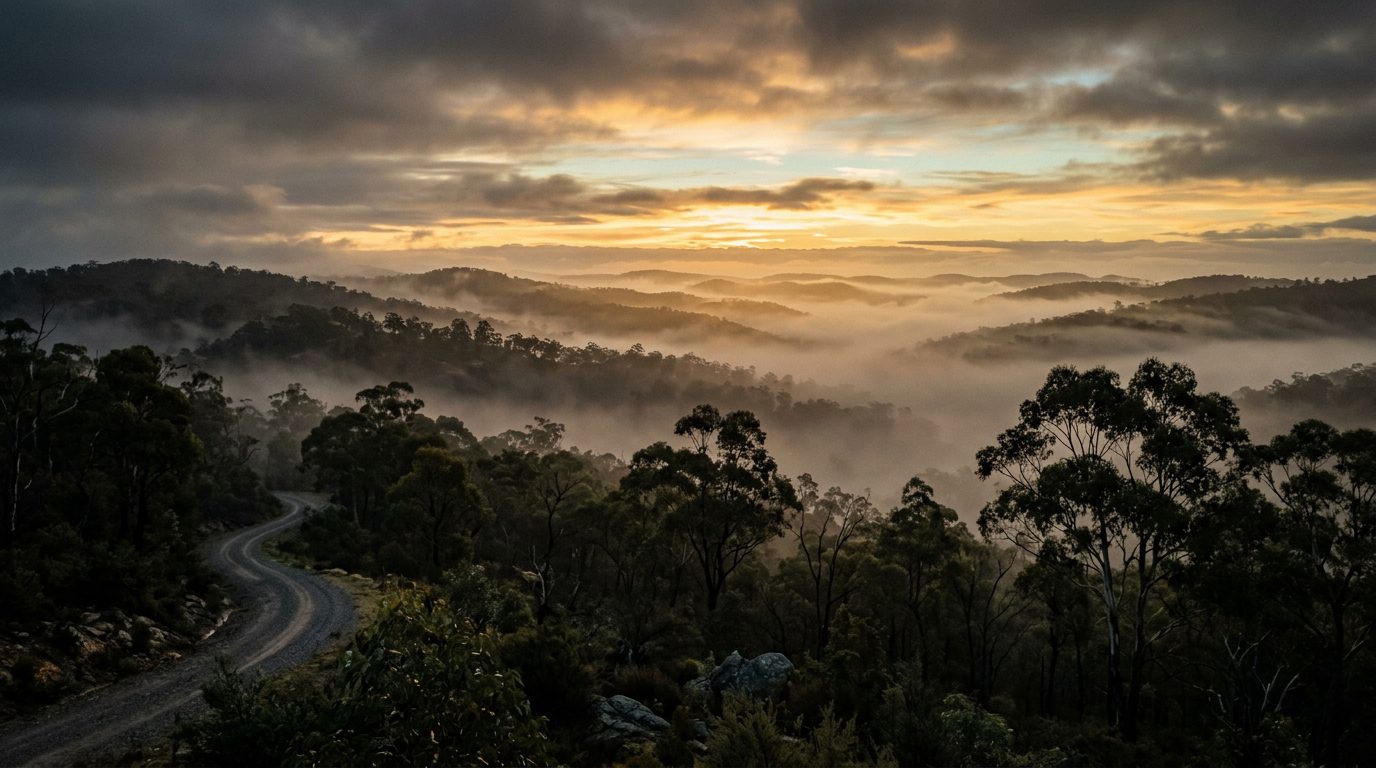
This is the country Nora Vass wakes up in at 4:47am on the morning her front door is open. The cold air on the porch is real cold, the kind you only get with elevation. Eucalyptus carries on the air the way damp pavement does after rain. The book opens with what the Hills smell like before it tells you what is wrong.

A psychological thriller needs space to breathe. It needs silence to make a small sound load-bearing, and isolation to make a kept secret a problem the protagonist has to solve alone. The Hills give the book both. Houses in this region sit on acreage. The closest neighbour is sometimes a kilometre away through stringybark and gravel road. When something is wrong inside a house here, no one is going to hear it.
Nora rebuilt the house from the frame. She is an architect, and she did the work the way she runs a project, with material specifications written down in advance.
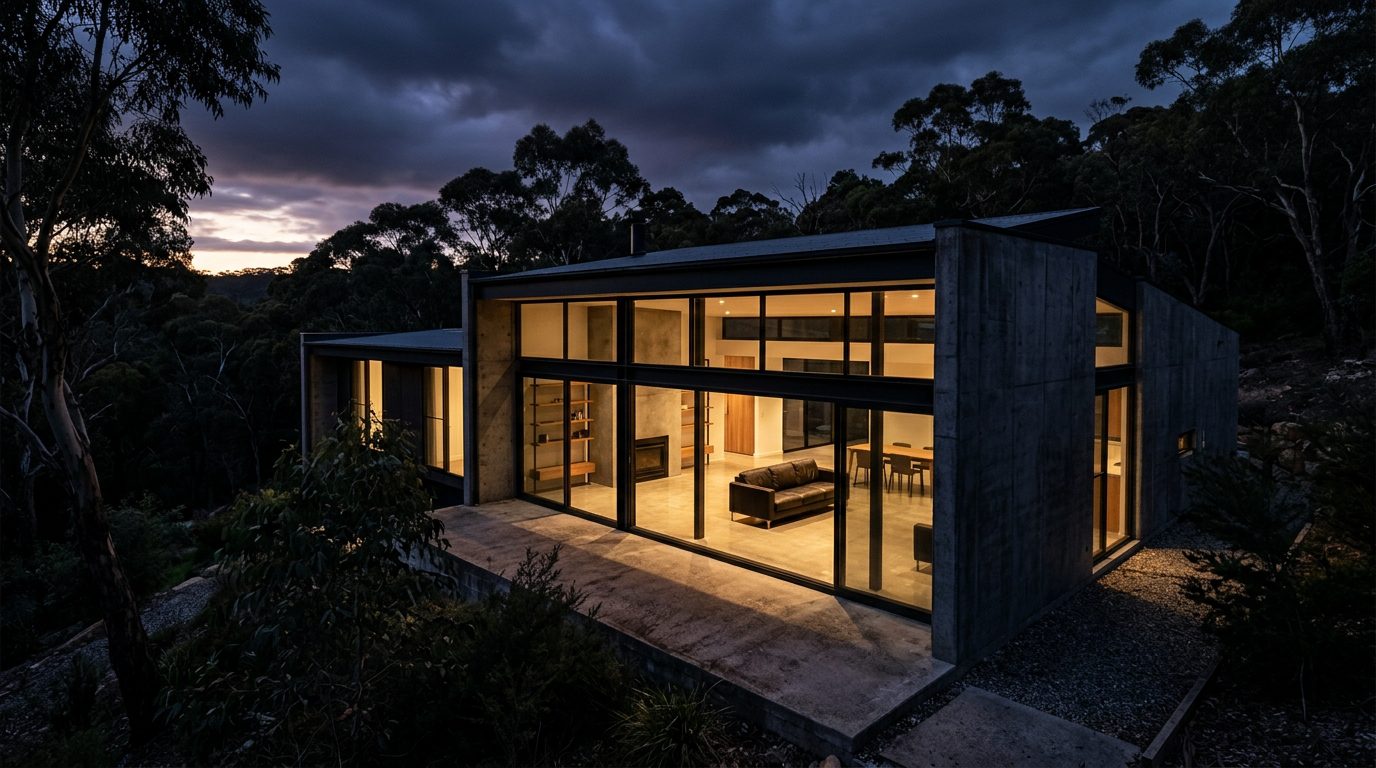
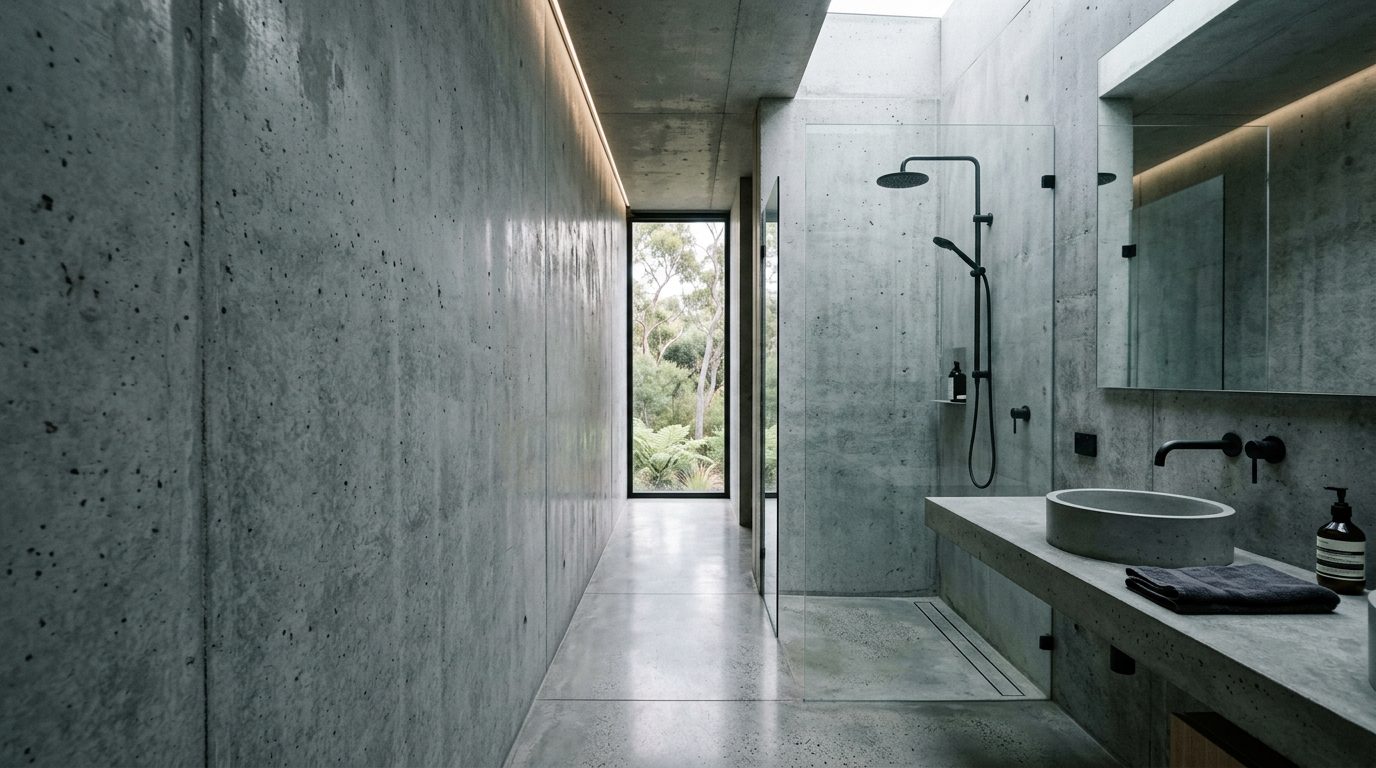
The floor is polished concrete, poured on site. She specified the aggregate mix herself, sized for the warmth of the finish she wanted and the way the sealant would lock the surface against marks. She knows the mark a heel makes on a sealant like that, with grit still loose in the polish. That detail matters in chapter one.
The walls are concrete too. The house does not settle. The Ring camera at the front door is mounted to a concrete wall, which means a shifted angle would require deliberate movement, not weather or thermal flex. That detail matters later.
The smart system was retrofitted into a structural envelope she had already locked down. Yale deadbolt. Nest thermostat. Arlo cameras. An Alexa speaker in the kitchen. The wiring she pulled herself through conduits she had specified to allow the upgrade. Every device has a label. Every label is in a notebook that lives in a kitchen drawer.
This is the house someone gets inside.
A psychological thriller built on smart-home compromise needs a protagonist who cannot be talked out of what she is seeing. Nora is the right kind of stubborn. She knows load paths. She specified the wiring. She trusts the building because she built the building.
Which means when her camera shows an empty porch at the moment the deadbolt withdraws, the answer is not “she might be tired” or “she might be wrong about what a thermostat log looks like.” Her therapist suggests anxiety. Her ex-husband suggests stress. Both arguments need her to be uncertain about her own work. She is not uncertain about her own work.
The book runs on this friction. Everyone around her knows she is an architect and still wants to explain the evidence away. Cole writes the gap between what Nora can prove and what other people are willing to believe as the place the dread lives. The Hills setting amplifies that gap because the Hills are quiet. There is no neighbour through a shared wall to corroborate a footstep.
The Adelaide Hills are a real cool-climate region in South Australia. They sit roughly twenty minutes east of Adelaide along the South Eastern Freeway, climbing through Crafers and Stirling and out toward Mount Lofty, then south toward the wineries. Stringybark eucalyptus is the dominant tree. Frost is normal at altitude in winter. The light at 4:47am in March is a thin grey that does not warm up until 7.
Cole keeps the geography honest. Adelaide is named. The drive from Sydney is named. The arterial roads coming out of the city are named. The book does not need a fake town. It uses a place that exists, because the place doing real work in the prose makes the technology read as real too. Smart home compromise is a thing that already happens. The Adelaide Hills is a place that already exists. Putting them together is what makes the book uncomfortable.